Navigating the Swiss Life Sciences job market requires more than just having the right experience.
Success depends on understanding how recruitment works in practice, and this includes knowing how Applicant Tracking Systems (ATS) evaluate CVs.
Following the Swiss Life Sciences career advice means not only tailoring your CV to highlight relevant skills and achievements but also presenting it in a way that ATS can read and rank effectively.
By doing so, you increase your visibility to recruiters and improve the likelihood that your application will be reviewed for roles in Pharma, Biotech, and MedTech, where competition is high and precision matters.
Small adjustments, like using the right job titles, mirroring the language of the job description, and focusing on relevant experience, can make a noticeable difference in getting noticed.
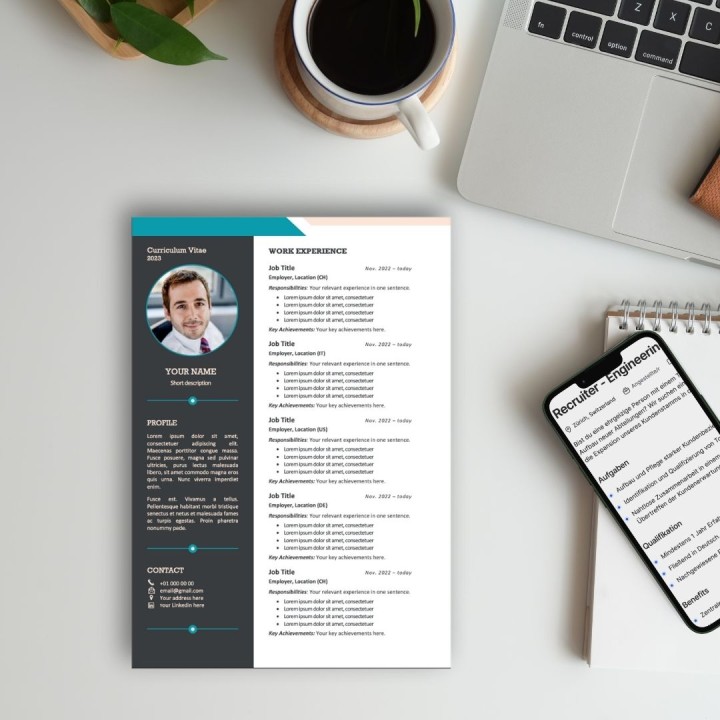
What is an Applicant Tracking System (ATS)
An Applicant Tracking System (ATS) is a software application used by recruiters and employers to manage, streamline, and automate the recruitment process. Serving as a digital tool, ATS handles the entire hiring workflow, from receiving and storing CVs to screening and shortlisting candidates. These systems play a crucial role in modern recruitment, enhancing efficiency and allowing organisations to manage talent acquisition effectively.
Understanding ATS Common Misconceptions
While ATS employ algorithms and some elements of machine learning, they do not possess true Artificial Intelligence capabilities. They can scan for specific keywords extracted from the job description or recruiter input, but most are unable (yet) to recognise synonyms or abbreviations.
A common misconception is that CVs are rejected solely by automation. In reality, automated rejections usually occur only if a candidate answers a knock-out question incorrectly (e.g. work permit / language). Understanding this nuanced process empowers candidates to navigate ATS, recruiters, HR, and hiring managers more effectively.
Why Do ATS Systems Rank CVs?
-
- Efficient Screening: ATS streamlines large volumes of applications, helping recruiters prioritise relevant candidates.
-
- Time-Saving: Ranking CVs saves recruiters time by presenting top candidates first.
-
- Objective Selection: ATS provides a standardised and fair method for ranking applicants, reducing bias.
Crafting Tailored CVs for Success
Your CV should meet the algorithm’s requirements while still capturing the attention of recruiters and hiring managers. Tailoring your CV ensures it bridges the gap between machine scanning and human review.
Optimising Your CV for ATS
-
- Contact Information: Include your name, phone number, email, and LinkedIn profile. Avoid reference contacts, as ATS may create unnecessary entries.
-
- Job Titles: Use industry-standard job titles rather than internal company titles. Align your titles with commonly used terminology in Pharma, Biotech, or MedTech.
-
- Vocabulary: Incorporate wording directly from the job description. Keywords should appear naturally. Avoid long keyword lists.
-
- Layout: Two-column formats work, but avoid text boxes, tables, and graphs, as ATS may not parse them correctly. Ensure recruiters can quickly scan your CV. If your main mode of application is via job portals, consider a one-column layout.
-
- Relevance: Focus on experience directly related to the role and remove unrelated content. Your bartender job during university might not be relevant to your future hiring manager.
Implications for Candidates
For applicants, CV ranking affects visibility, selection, and success:
-
- Visibility: CVs closely matching recruiter criteria rank higher.
-
- Selection for Review: Higher-ranked CVs are more likely to be reviewed.
-
- Customisation Matters: Tailoring each CV improves ranking.
-
- ATS-Friendly Formatting: Use standard fonts, avoid graphics or tables, and upload machine-readable formats such as Word or PDF.
By understanding the ATS landscape, candidates can position themselves for success in the competitive Swiss Life Sciences job market. Attention to contact information, job titles, vocabulary, layout, and relevance ensures your CV works for both algorithms and human reviewers.
For more insight into how modern recruitment systems operate, you can explore SAP’s guide to Talent Management or visit Workday for practical examples. If you want to ensure your CV is fully optimised for both ATS and recruiter review, I offer personalised CV reviews for senior Life Sciences professionals (CV review) to improve your visibility and ensure your experience is presented effectively for Pharma, Biotech, and MedTech roles.
